
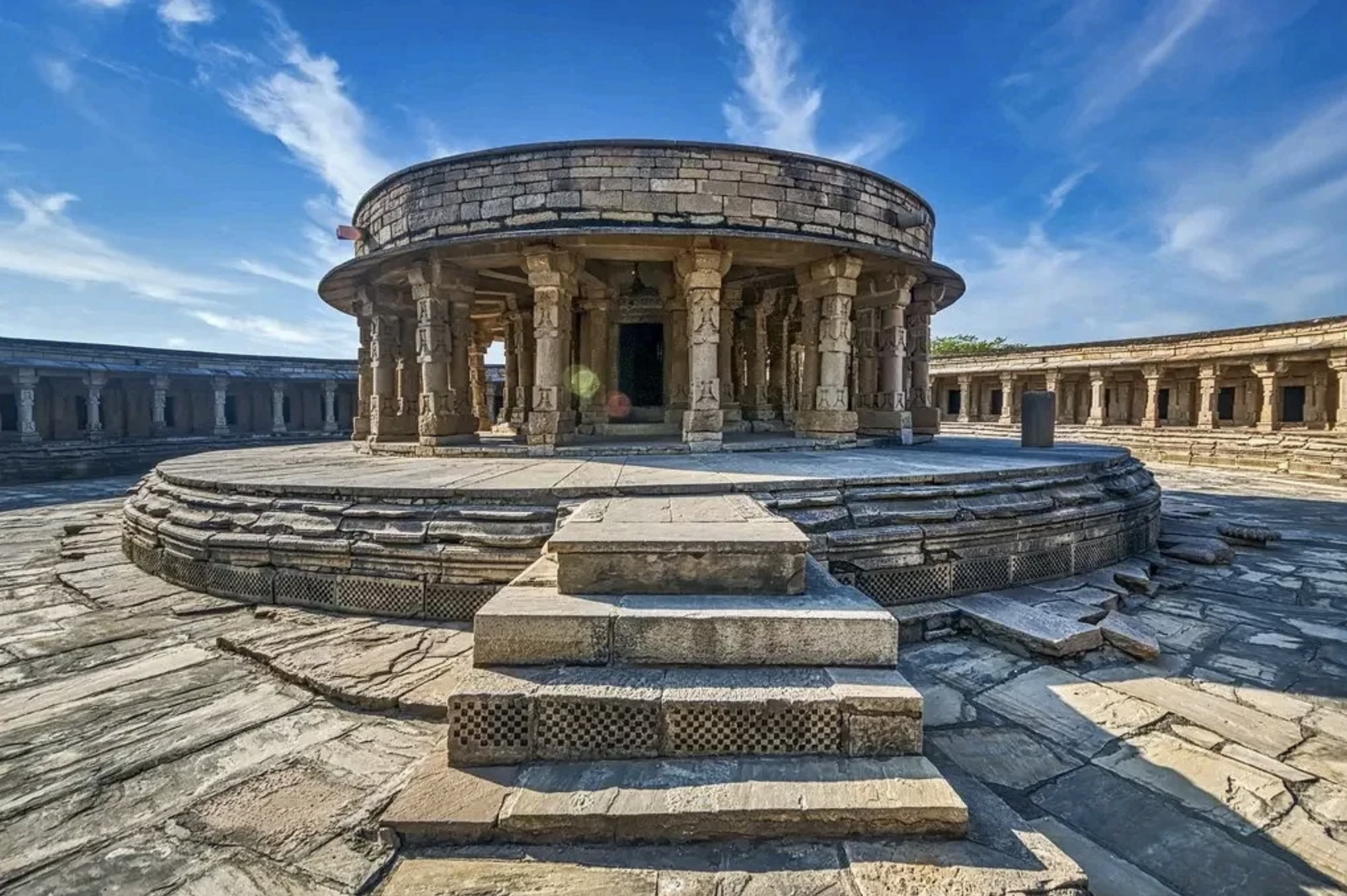

Ekattarso Mahadev Mandir (Chausath Yogini Temple), Morena
Chausath Yogini Temple, Mitaoli, popularly known as Ekattarso Mahadev Mandir, is one of the most fascinating and historically significant temples in India. Located in the village of Mitaoli in Morena, Madhya Pradesh, this ancient temple is dedicated to Lord Shiva and the 64 Yoginis, divine feminine energies associated with Tantra and Shakti worship. The temple sits on a hilltop and is famous not only for its spiritual importance but also for its unique circular architecture, which many historians believe inspired the design of India’s Parliament building.
Temple History
The Ekattarso Mahadev Mandir is believed to have been built around the 11th century during the reign of the Kachchhapaghata dynasty. Historical inscriptions suggest that the temple was constructed by King Devapala around 1055 CE. The temple was originally dedicated to the worship of the 64 Yoginis, powerful manifestations of the Divine Mother who are closely associated with Tantric traditions.
Over time, a Shiva Lingam was installed in the central shrine, and the temple began to be widely known as Ekattarso Mahadev, which means “71 Mahadevas.” The name refers to the numerous small shrines built around the circular corridor of the temple. Each of these small chambers originally housed idols of Yoginis or forms of Shiva, symbolizing the union of Shakti (divine feminine energy) and Shiva (cosmic consciousness).
The temple has also attracted the attention of historians and architects due to its remarkable structure. The circular layout with surrounding pillars and central shrine resembles the structure of the Indian Parliament building in New Delhi, India, and many believe the ancient temple served as architectural inspiration.
Spiritual Importance
Ekattarso Mahadev Mandir holds immense spiritual importance in Tantric and Shaiva traditions. The 64 Yoginis are considered powerful divine energies who assist devotees in spiritual growth, protection, and awakening of higher consciousness.
Devotees believe that worshipping at this temple can bring spiritual strength, protection from negative energies, and fulfillment of wishes. The temple is also associated with ancient Tantric practices where sages and spiritual seekers performed meditation and rituals to attain spiritual powers.
The central Shiva Lingam represents the ultimate cosmic energy, while the Yoginis symbolize the dynamic forces of the universe. Together they represent the balance of divine masculine and feminine energies.
Temple Architecture
The architecture of the temple is unique and mesmerizing. The temple stands on a hill and visitors must climb approximately 100 steps to reach the entrance. Once inside, the temple reveals a perfect circular structure consisting of 64 small chambers built along the inner perimeter.
Each chamber once contained statues of Yoginis or deities. In the center of the circular courtyard lies the main Shiva temple, dedicated to Ekattarso Mahadev. The temple complex also offers breathtaking panoramic views of the surrounding countryside.
The open-air design of the temple suggests that ancient Tantric rituals were performed under the open sky, which is a common feature of Yogini temples across India.
Religious Use and Worship
Today the temple continues to be an important pilgrimage site for devotees of Lord Shiva and Shakti. Devotees visit the temple to offer prayers, perform Rudrabhishek, and seek blessings for prosperity and spiritual growth.
Special worship is performed during Mahashivratri, when thousands of devotees gather to celebrate the divine union of Shiva and Shakti. The temple also attracts historians, researchers, and architecture enthusiasts who come to study its ancient design.
Apart from religious worship, the temple is also visited by tourists interested in India’s ancient Tantric traditions and heritage architecture.
How to Reach
Ekattarso Mahadev Mandir is located near the town of Morena in the state of Madhya Pradesh.
By Air:
The nearest airport is in Gwalior, Madhya Pradesh, which is about 40–50 kilometers away from the temple. From the airport, visitors can hire a taxi or private vehicle to reach the temple.
By Train:
The nearest railway station is Morena Railway Station, which is well connected with major cities in India. From the station, the temple is about 30–35 kilometers away and can be reached by taxi or local transport.
By Road:
The temple is easily accessible by road. Visitors can travel from Morena or Gwalior via taxi, private car, or bus. The final stretch involves climbing the hill steps to reach the temple complex.
Opening and Closing Time
The temple is generally open to visitors during the following hours:
Opening Time: 6:00 AM
Closing Time: 6:00 PM
Timings may vary during festivals such as Mahashivratri and special religious events.
Contact Details
Since the temple is maintained as a protected historical monument under the supervision of the Archaeological Survey of India, there is usually no direct temple management contact number available. Visitors can contact the local tourism office in Morena or Gwalior for additional information regarding visiting hours and travel arrangements.
Conclusion
Ekattarso Mahadev Mandir (Chausath Yogini Temple) in Morena is a magnificent blend of spirituality, history, and architectural brilliance. The temple stands as a testament to India’s ancient Tantric traditions and the deep reverence for Shiva and Shakti in Hindu culture. Its circular design, hilltop location, and historical significance make it one of the most unique temples in India. Visiting this sacred place offers not only a spiritual experience but also a chance to witness the rich heritage and mystical traditions of ancient India. 🙏
Wifi.info:
The Chausath Yogini Temple, Mitaoli, also known as Ekattarso Mahadeva Temple, is an 11th-century temple in Morena district in the Indian state of Madhya Pradesh. Build during Kachchhapaghata reign, it is one of the well-preserved Yogini temples in India. The temple is formed by a circular wall with 65 chambers, apparently for 64 yoginis and the goddess Devi, and an open mandapa in the centre of a circular courtyard, sacred to Shiv
Context: Yogini temples
Main article: Yogini temples
Infographic on significance of Yogini temples, showing design for communion with yoginis, thought to be capable of flight
The Yogini shrines are usually circular enclosures, and they are hypaethral, open to the sky, unlike most Indian temples. This is because they were designed for communion with yoginis, thought to be capable of flight.[2] Inside the circular wall are niches, most often 64, containing statues of female figures, the yoginis. Their bodies are described as beautiful, but their heads are often those of animals.[3] Yogini temples normally stood somewhat outside the main group of temples, and at the highest point of the site.
History
The Chausath Yogini temple is in Mitaoli village,[a] Morena district, Madhya Pradesh.[1][5][6] According to an inscription dated to 1323 CE (Vikram Samvat 1383),[7] the temple was built by the Kachchhapaghata king Devapala (r. c. 1055 – 1075).[8] It is said that the temple was the venue of providing education in astrology and mathematics based on the transit of the Sun.
The Archaeological Survey of India has declared the temple an ancient and historical monument under Act No. LXXI of 1951, dt.28/11/1951.
Features
The temple is on a hill about 100 feet (30 m) in height;[9] there are 100 steps to climb up to the entrance. It is circular with a radius of 170 feet (52 m),[9] while inside it has 65 small chambers, each with a mandapa which is open and a facia of pilasters and pillars. The roof of the ring of shrines is flat, as is that of the central shrine to Shiva; the circular courtyard is hypaethral, open to the sky, with an open porch as its entrance. The parliament building of India is said to have been based on this temple.
The exterior surface of the outer wall, unlike other Yogini temples which are quite plain outside, was decorated with statues of couples flanked by maidens, mostly now lost or badly damaged.[6][10]
Each of the chambers around the inside of the perimeter wall now contains an image of Shiva. However, originally these contained 64 Yogini images and probably one image of the great goddess Devi.[10] The temple is therefore known as Chausath Yogini Temple (Chausath being the Hindi for “Sixty four”. It is said that the roofs over the 64 chambers and the central shrine had towers or shikharas, as those at the Chausath Yogini Temple, Khajuraho still do, but that these were removed during later modifications. The central shrine’s roofing slabs are perforated to allow rainwater to drain through pipes to a large underground tank.
The temple is in the Seismic Zone III region and has survived several earthquakes, seemingly without any serious damage. This fact was cited when the issue of safety from earthquake effect of the circular Parliament House, its design supposedly based on the Mitaoli temple, was debated in the Indian Parliament.